Order now for an automatic 20% discount! | Worldwide Shipping.
Order now for an automatic 20% discount! | Worldwide Shipping.
Klippel-Trenaunay Syndrome (KTS) and Port-Wine Stains | Aspilon
Mar 12, 2025
Ecommerce
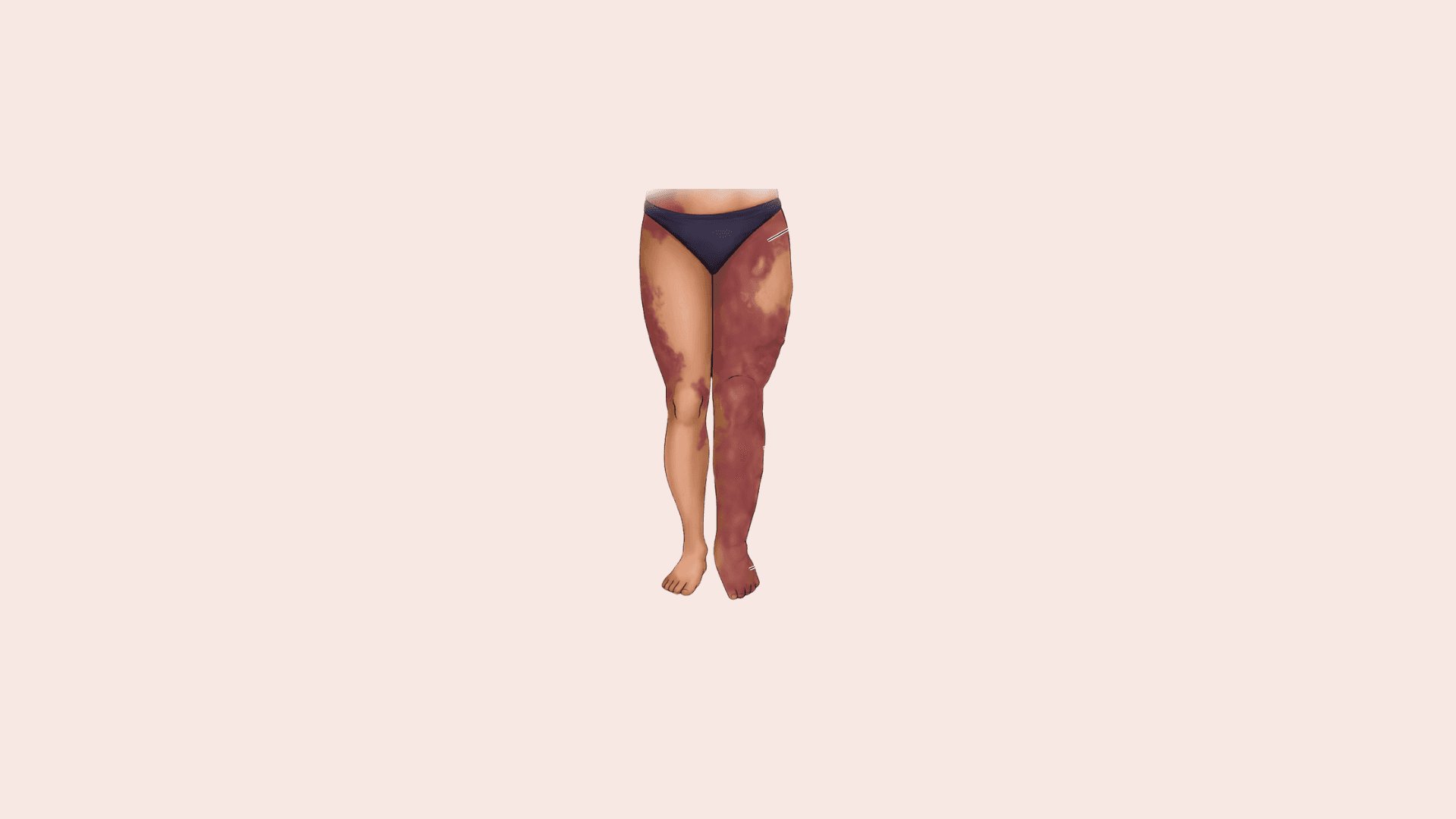
Klippel-Trenaunay Syndrome (KTS) and Port-Wine Stains
Klippel-Trenaunay syndrome (KTS) is a rare congenital vascular disorder that includes a port-wine stain as one of its defining features. However, it is a fundamentally different condition from Sturge-Weber syndrome — with different genetics, different anatomy, and different complications. Understanding this distinction is important for anyone with a port-wine stain who has been told about KTS, or for healthcare professionals working with this population.
What Is Klippel-Trenaunay Syndrome?
KTS belongs to the PIK3CA-related overgrowth spectrum (PROS) — a group of conditions caused by mutations in the PIK3CA gene. These mutations disrupt the mTOR signaling pathway, leading to unregulated cell proliferation and the formation of abnormal vascular and lymphatic structures.
The condition affects approximately 1 in 20,000 to 40,000 individuals. It is almost always sporadic — occurring without family history — and arises from a random somatic mutation during early fetal development.
The Classic KTS Triad
1. Port-wine stain / capillary malformation
The PWS in KTS typically covers a limb — most commonly one leg — rather than the face. It may also extend to the buttocks, trunk, or genitalia. The stain is caused by capillary malformations, identically to an isolated PWS, but in the context of the broader vascular disorder.
2. Venous and lymphatic malformations
Varicose veins that are unusually large, appear early in life, and cover a wider area than typical varicose veins are a hallmark of KTS. Deep venous malformations are also common and increase the risk of blood clots. The lymphatic system is frequently involved, causing lymphedema and fluid buildup in the affected limb.
3. Limb overgrowth
One limb — usually a leg — grows larger and longer than the other due to overgrowth of bone and soft tissue. This overgrowth begins in infancy and may progress through childhood before stabilizing. It causes gait abnormalities, hip and spine misalignment, and in severe cases significant functional impairment.
Key Complications of KTS
Deep vein thrombosis and pulmonary embolism
The malformed deep veins in KTS carry a meaningful risk of blood clot formation (deep vein thrombosis or DVT). If a clot travels to the lungs, it causes a pulmonary embolism — a potentially life-threatening emergency. This risk requires ongoing monitoring and preventive strategies.Coagulation disorders
Many KTS patients develop localized intravascular coagulopathy (LIC) — a low-grade blood clotting abnormality caused by stagnant blood in dilated veins. In severe cases this can progress to disseminated intravascular coagulopathy (DIC), a generalized bleeding disorder. D-dimer blood tests are used to monitor this.Gastrointestinal complications
Vascular malformations can extend to the gastrointestinal tract in 1 to 12.5 percent of KTS cases, causing bleeding from the colon, rectum, or upper GI tract. This typically manifests in the first decade of life.Lymphedema and skin complications
Abnormal lymphatic drainage leads to chronic swelling, recurrent cellulitis (skin infections), skin ulcers, and poor wound healing in the affected limb.Scoliosis
Significant leg length discrepancy causes the pelvis to tilt, which leads to compensatory spinal curvature (scoliosis) over time.Chronic pain
Pain from vascular malformations, infections, swelling, and bone involvement is a common and often undertreated aspect of KTS.
How Does KTS Differ from Sturge-Weber Syndrome?
This is a common point of confusion because both conditions involve port-wine stains. The key differences are:
• Gene: KTS — PIK3CA mutation. SWS — GNAQ mutation
• PWS location: KTS — primarily a limb. SWS — primarily the face
• Brain involvement: KTS — none. SWS — leptomeningeal angioma possible
• Eye involvement: KTS — not typical. SWS — glaucoma common
• Primary complications: KTS — vascular, lymphatic, limb overgrowth, DVT. SWS — seizures, glaucoma, cognitive impairment
A person with a facial PWS only, without limb involvement or varicose veins, is very unlikely to have KTS. Their clinical picture points toward SWS risk instead.
Diagnosis
KTS is typically identified in childhood when limb size discrepancy and abnormal veins become visible alongside the PWS. Diagnostic investigations include Doppler ultrasound of the affected limb, MRI, blood tests for coagulation abnormalities, and PIK3CA genetic testing.
Management
There is no cure for KTS. Management is symptom-directed and multidisciplinary:
• Compression therapy — elastic garments to reduce swelling and lymphedema
• Anticoagulation — to prevent and treat DVT
• Sclerotherapy — injection of a solution to seal abnormal veins
• Laser therapy — for skin lesions and bleeding blebs
• Surgical debulking — removal of excess soft tissue when it impairs function
• Epiphysiodesis — orthopedic procedure to stop excessive limb length growth
• Laser or radiofrequency ablation — to close malformed veins
Klippel-Trenaunay Syndrome (KTS) and Port-Wine Stains
Klippel-Trenaunay syndrome (KTS) is a rare congenital vascular disorder that includes a port-wine stain as one of its defining features. However, it is a fundamentally different condition from Sturge-Weber syndrome — with different genetics, different anatomy, and different complications. Understanding this distinction is important for anyone with a port-wine stain who has been told about KTS, or for healthcare professionals working with this population.
What Is Klippel-Trenaunay Syndrome?
KTS belongs to the PIK3CA-related overgrowth spectrum (PROS) — a group of conditions caused by mutations in the PIK3CA gene. These mutations disrupt the mTOR signaling pathway, leading to unregulated cell proliferation and the formation of abnormal vascular and lymphatic structures.
The condition affects approximately 1 in 20,000 to 40,000 individuals. It is almost always sporadic — occurring without family history — and arises from a random somatic mutation during early fetal development.
The Classic KTS Triad
1. Port-wine stain / capillary malformation
The PWS in KTS typically covers a limb — most commonly one leg — rather than the face. It may also extend to the buttocks, trunk, or genitalia. The stain is caused by capillary malformations, identically to an isolated PWS, but in the context of the broader vascular disorder.
2. Venous and lymphatic malformations
Varicose veins that are unusually large, appear early in life, and cover a wider area than typical varicose veins are a hallmark of KTS. Deep venous malformations are also common and increase the risk of blood clots. The lymphatic system is frequently involved, causing lymphedema and fluid buildup in the affected limb.
3. Limb overgrowth
One limb — usually a leg — grows larger and longer than the other due to overgrowth of bone and soft tissue. This overgrowth begins in infancy and may progress through childhood before stabilizing. It causes gait abnormalities, hip and spine misalignment, and in severe cases significant functional impairment.
Key Complications of KTS
Deep vein thrombosis and pulmonary embolism
The malformed deep veins in KTS carry a meaningful risk of blood clot formation (deep vein thrombosis or DVT). If a clot travels to the lungs, it causes a pulmonary embolism — a potentially life-threatening emergency. This risk requires ongoing monitoring and preventive strategies.Coagulation disorders
Many KTS patients develop localized intravascular coagulopathy (LIC) — a low-grade blood clotting abnormality caused by stagnant blood in dilated veins. In severe cases this can progress to disseminated intravascular coagulopathy (DIC), a generalized bleeding disorder. D-dimer blood tests are used to monitor this.Gastrointestinal complications
Vascular malformations can extend to the gastrointestinal tract in 1 to 12.5 percent of KTS cases, causing bleeding from the colon, rectum, or upper GI tract. This typically manifests in the first decade of life.Lymphedema and skin complications
Abnormal lymphatic drainage leads to chronic swelling, recurrent cellulitis (skin infections), skin ulcers, and poor wound healing in the affected limb.Scoliosis
Significant leg length discrepancy causes the pelvis to tilt, which leads to compensatory spinal curvature (scoliosis) over time.Chronic pain
Pain from vascular malformations, infections, swelling, and bone involvement is a common and often undertreated aspect of KTS.
How Does KTS Differ from Sturge-Weber Syndrome?
This is a common point of confusion because both conditions involve port-wine stains. The key differences are:
• Gene: KTS — PIK3CA mutation. SWS — GNAQ mutation
• PWS location: KTS — primarily a limb. SWS — primarily the face
• Brain involvement: KTS — none. SWS — leptomeningeal angioma possible
• Eye involvement: KTS — not typical. SWS — glaucoma common
• Primary complications: KTS — vascular, lymphatic, limb overgrowth, DVT. SWS — seizures, glaucoma, cognitive impairment
A person with a facial PWS only, without limb involvement or varicose veins, is very unlikely to have KTS. Their clinical picture points toward SWS risk instead.
Diagnosis
KTS is typically identified in childhood when limb size discrepancy and abnormal veins become visible alongside the PWS. Diagnostic investigations include Doppler ultrasound of the affected limb, MRI, blood tests for coagulation abnormalities, and PIK3CA genetic testing.
Management
There is no cure for KTS. Management is symptom-directed and multidisciplinary:
• Compression therapy — elastic garments to reduce swelling and lymphedema
• Anticoagulation — to prevent and treat DVT
• Sclerotherapy — injection of a solution to seal abnormal veins
• Laser therapy — for skin lesions and bleeding blebs
• Surgical debulking — removal of excess soft tissue when it impairs function
• Epiphysiodesis — orthopedic procedure to stop excessive limb length growth
• Laser or radiofrequency ablation — to close malformed veins
Our articles
About Aspilon
Aspilon is made in Belgium, developed in our own lab
Read now
About Aspilon
Aspilon is made in Belgium, developed in our own lab
Read now
Educational
Port-Wine Stain Facial Changes: Skin, Tissue & Dental Complications | Aspilon
Read now
Educational
Port-Wine Stain Facial Changes: Skin, Tissue & Dental Complications | Aspilon
Read now
Educational
Port-Wine Stain and Glaucoma: Eye Pressure, Risk & Screening | Aspilon
Read now
Educational
Port-Wine Stain and Glaucoma: Eye Pressure, Risk & Screening | Aspilon
Read now
Educational
Port-Wine Stain: All Medical Conditions, Symptoms & Complications | Aspilon
Read now
Educational
Port-Wine Stain: All Medical Conditions, Symptoms & Complications | Aspilon
Read now
Our articles
About Aspilon
Aspilon is made in Belgium, developed in our own lab
Read now
Educational
Port-Wine Stain Facial Changes: Skin, Tissue & Dental Complications | Aspilon
Read now
Educational
Port-Wine Stain and Glaucoma: Eye Pressure, Risk & Screening | Aspilon
Read now
Educational
Port-Wine Stain: All Medical Conditions, Symptoms & Complications | Aspilon
Read now
Let's stay in touch!
Let's stay in touch!
Sign up to our mailing list and get a 20% discount!
Sign up and get a 20% discount!